How to Frame a Newspaper or Magazine Article (2026 Guide)
TL;DR
Most people frame the online version: send the link, get a proof within 48 hours, approve it, and the article is printed at 300 DPI and framed. Nothing is printed until you approve. How it works →
Have a paper clipping or a magazine feature? A frame shop can preserve the original; if the story also ran online, rebuilding it from the link gives a cleaner print that never yellows. Which version do you have? →
Doing it yourself? Budget a few hours and print-resolution images. DIY or done for you →
Is my article worth framing? Yes, and it’s very often a gift: profiles, business milestones, company features, awards and sports wins lead our data from 450 orders. What people frame →
Size: choose by reading distance and photos, not word count. 16×20” is the most common pick, about 4 in 10 orders. Format and size →
Cost in 2026: $79 (8×12”) to $229 (24×32”) with us; $75–$250 across the market. Pricing →
Copyright: framing your own coverage for private display is standard practice; commercial use needs the publisher’s license. The copyright question →
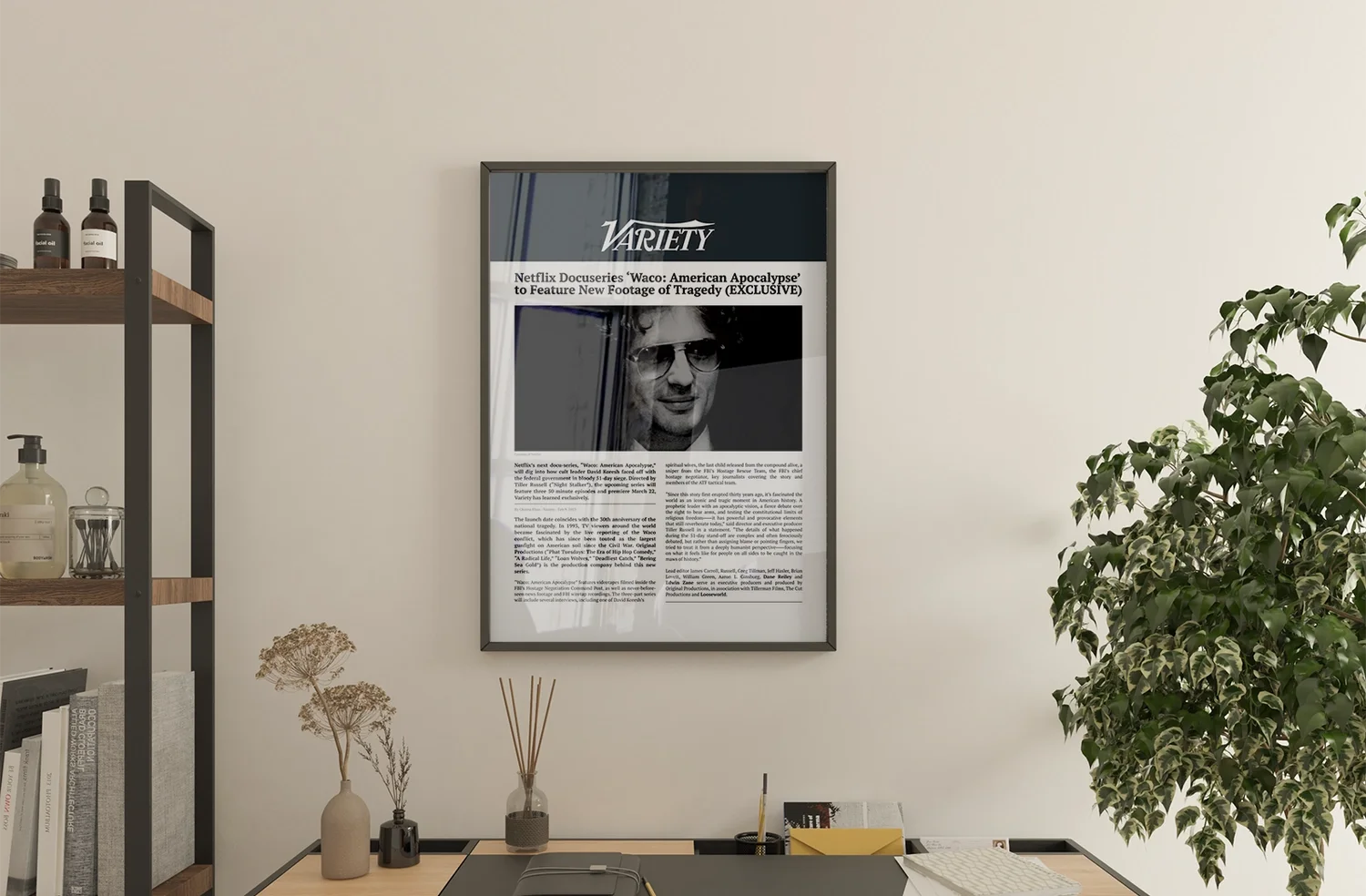
Framing a newspaper or magazine article means rebuilding the story as a real newspaper-style page (masthead, headline, columns, photos), printing it at 300 DPI and framing it behind protective glazing. You can do it yourself in a design tool, or have it done from just the article’s link, with a proof to approve before anything is printed.
That’s the short version. The rest of this guide settles the two questions that come first (which version of the article you have, and whether you do it yourself or have it done), then covers what people actually frame, what size to pick, what it costs in 2026, and the copyright question everyone asks. It’s written by the team at YourFramedArticle. We make custom framed articles for a living, so where we have a stake, we’ll say so.
First, which version of the article do you have?
The process changes slightly depending on whether the story lives online, on paper, or both.
An online article (the most common case)
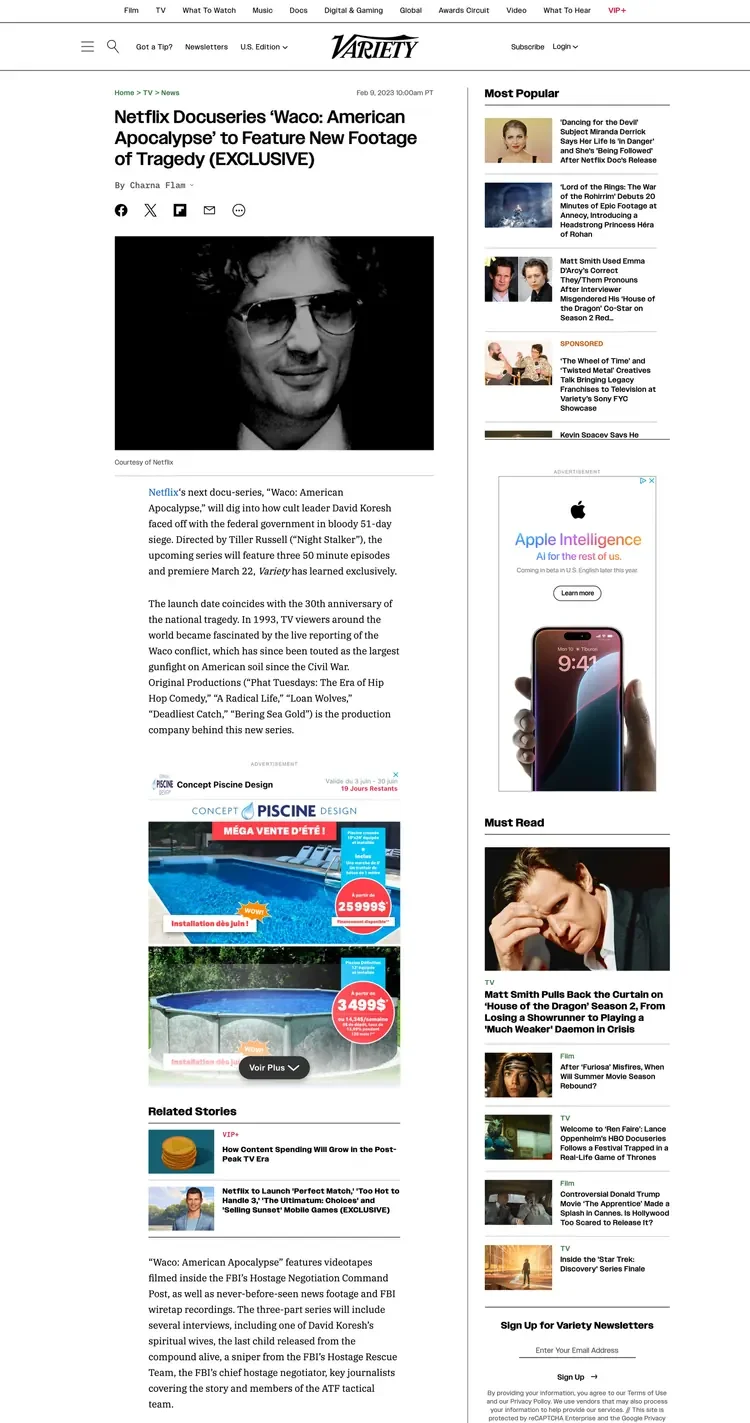
Most of the articles we frame were published online: a news site, a trade publication, a newsletter, a magazine’s website. Many never existed on paper at all. If your article has a link, that link is all you need; the story is rebuilt from it as a print-quality page. This guide follows that case by default.
A paper clipping
If the physical clipping itself is what matters, have it framed by a frame shop with conservation materials: acid-free mat and backing, UV-filtering glazing, and no tape or glue on the paper. Newsprint is acidic and yellows with light and air, so keep it out of direct sun either way. If the story also ran online (most have in the last two decades), consider rebuilding it from the link instead: the print stays crisp, can be sized to the wall, and the original stays safe in a drawer.
A magazine feature
A magazine feature usually runs across several pages with ads in between, so torn-out pages rarely frame well. The cleaner route is to rebuild the story as a single layout, with the headline, photos and full text on one page; turned horizontally, an 18×24” or 24×32” holds a multi-page feature. Want the cover on the wall too? Frame the physical cover on its own; the article is what gets rebuilt. That is how most of the framed magazine articles we make are built.
Then, do it yourself or have it done?
Do it yourself: a few hours in Canva or Figma, you source print-resolution images, the result depends on your layout skills, and the cost is test prints plus a frame (or $30 for our print-ready design alone).
Have it done: about 10 minutes to order plus a proof review, images pulled from the article or the photos you send, a newspaper-style page with a proof within 48 hours, $79 to $229 framed.
Going the DIY route? Budget a few hours, source print-resolution images, export at 300 DPI, and order a test print before committing to a frame. Our step-by-step DIY walkthrough covers the pitfalls; most of them involve image resolution. Having it done? Skip to From link to wall below.
Is my article worth framing? Here’s what people actually frame
Yes. If you, or someone you care about, is in the article, it belongs on a wall. That is what nearly every framed article has in common. We went through 450 articles our customers framed, and the occasions are broader than most people expect:
Personal profiles and interviews (20%): founder interviews, artist features, “meet your neighbor” pieces. The biggest category by far.
Business milestones (14%): acquisitions, funding rounds, name-partner promotions, product launches.
Company features (11%): a journalist telling your company’s story.
Personal essays and op-eds (8%): people frame their own words, not just coverage of themselves.
Awards and “best of” lists (7%): a 40 under 40, an Out100, an industry ranking.
Sports milestones (5%): state titles, record rounds, first career walk-offs.
Weddings, engagements and family news (3%).
Three things the data also shows. The frame is very often a gift: a daughter’s championship, a friend’s first big feature, a colleague’s retirement story. A quarter of orders come from companies framing their own milestones or gifting a frame to a founder, a retiring executive or a client who just made the news. And the masthead doesn’t matter: those 450 articles came from 337 different publications, and local press (29%) beats national press (26%). Full findings in our report on what people actually frame.
Choose the format and size
Format: frame, plaque, or acrylic?
A wood frame is the contemporary choice for a home, an office or a gallery wall, and it keeps the print removable. A wood plaque is the traditional format: permanently sealed, the way awards are mounted, at home in a corporate corridor. Acrylic is the most modern option, frameless and suited to client-facing walls. We wrote an honest side-by-side, including where each option disappoints, in our comparison of newspaper plaques vs. frames vs. acrylic. Received a plaque mock-up by email? See That’s Great News plaque prices, compared.
Size: what actually decides it
Because the layout is rebuilt from scratch, almost any article fits any size. What changes is reading distance, how much room the photos get, and how much presence the piece has on a wall. For reference: we’ve fit a 1,000-word news story on an 8×12” and a 2,850-word feature on an 18×24”.
8×12”: $79. Desk, shelf, or gallery wall; reads comfortably at arm’s length.
12×16”: $89. Hallway or home office; easy with a standard news article and a photo or two.
16×20”: $119. Our most popular size, about 4 in 10 orders, and the most versatile for photo-heavy features.
18×24”: $159. Statement wall, lobby, or boardroom; longform and multi-photo layouts.
24×32”: $229. Our largest format: reception areas, press walls, full front pages and multi-page features.
Past roughly 3,000 words the layout gets edited down, the way a print editor would cut for space, with your approval on the proof. Larger custom sizes are available on request. For room-by-room guidance, see our framed article sizing guide.
From link to wall (if you have it done)
Here’s exactly what happens with us; other services differ:
Paste the article’s link at checkout on the order page.
A designer rebuilds it as a newspaper page, with masthead, dateline, columns and pull quotes. Not a screenshot blown up.
You get a proof within 48 hours (weekdays). Nothing is printed before you approve it.
Request changes freely, from headline tweaks to photo swaps and trimming, until it’s right.
Print, frame, ship. Your order arrives within a week of approval. Frames are Ayous wood with an Acrylite front and sealed backing; prints use sun-resistant inks on 10.3 mil stock.
Behind a paywall?
In our data, one framed article in four is. Three ways around it. If you or the person in the article subscribes, most major outlets (The New York Times, The Wall Street Journal, The Washington Post, The Atlantic, Bloomberg) let subscribers create a gift link that opens the article for anyone; send us that link. Otherwise, send the article text and the photos by email. The same route works for articles that have been taken offline, which had already happened to 6% of the articles our customers framed. A screenshot alone can’t be used: web images render at 72–96 DPI, far below print quality.
What it costs in 2026
A custom framed article runs $75–$250 in 2026 depending on size and vendor. Our pricing, proof included:
8×12”: $79
12×16”: $89
16×20”: $119
18×24”: $159
24×32”: $229
Prefer to frame it yourself? We also sell the design on its own: $30 for a print-ready PDF, or $40 printed and shipped.
For context across the market: the established competitors charge $195–$237 (as of September 2026) with proofs in about five days and two to three weeks to delivery. We’re at a proof within 48 hours, delivery within a week of approval, from $79. Gifting it? No invoice goes in the box. Acrylic runs slightly higher than the equivalent framed size; details on the acrylic article prints page.
Can you legally frame an article? (the copyright question)
For personal, private display (your own story, framed on your own wall), framing a copy of an article you were featured in is broadly considered a personal use, and it’s how thousands of framed articles hang in homes and offices. Mass reproduction, resale of the article itself, or commercial redistribution are a different matter and generally require the publisher’s license. Three practical notes:
You being in the article matters emotionally, not legally: the publisher owns the text, the photographer or outlet owns the photos. Personal-display framing sits in a long-standing custom of clipping and keeping press coverage.
Some publications sell official reprints. Forbes, The New York Times and The Wall Street Journal all run licensing storefronts, the official route if you want a licensed copy or plan any commercial use.
When in doubt, ask the publisher; small outlets almost always say yes, and are usually delighted.
FAQ
How do you frame a newspaper article from the internet?
Rebuild the article as a print layout (or have a service do it from the link), print it at 300 DPI on quality stock, and mount it in a frame behind glazing. Don’t print a screenshot: screen resolution is 72–96 DPI and looks blurry at frame size.
How much does it cost to frame a newspaper article?
Custom framed articles run $75–$250 in 2026 depending on size and vendor. At YourFramedArticle, prices start at $79 for 8×12” and top out at $229 for 24×32”, proof included. Traditional frame shops charge more because they frame an object you bring; here the print is part of the service.
How long does it take?
With us: a design proof within 48 hours on weekdays, then delivery within a week after you approve; most orders arrive 5–10 days after ordering. Several competitors quote two to three weeks before shipping even starts.
Can I frame an article that’s behind a paywall?
Yes. Send a subscriber gift link if you have one, or paste the article text and email the photos; the layout is rebuilt from those. This is also the route for articles that have been taken offline.
What’s the best size for a framed article?
Almost any article fits any size, because the layout is rebuilt to fit, so choose by reading distance and photos instead. 8×12” suits a desk or shelf; go 16×20” or 18×24” if you want it readable from across a room or the article is photo-heavy; 24×32” is for reception areas and press walls. 16×20” is our most popular size, on about 4 in 10 orders.
Ready to see yours on the wall? Send the link and you’ll have a proof of the finished newspaper layout within 48 hours. Nothing is printed until you approve it. Get your custom framed article →